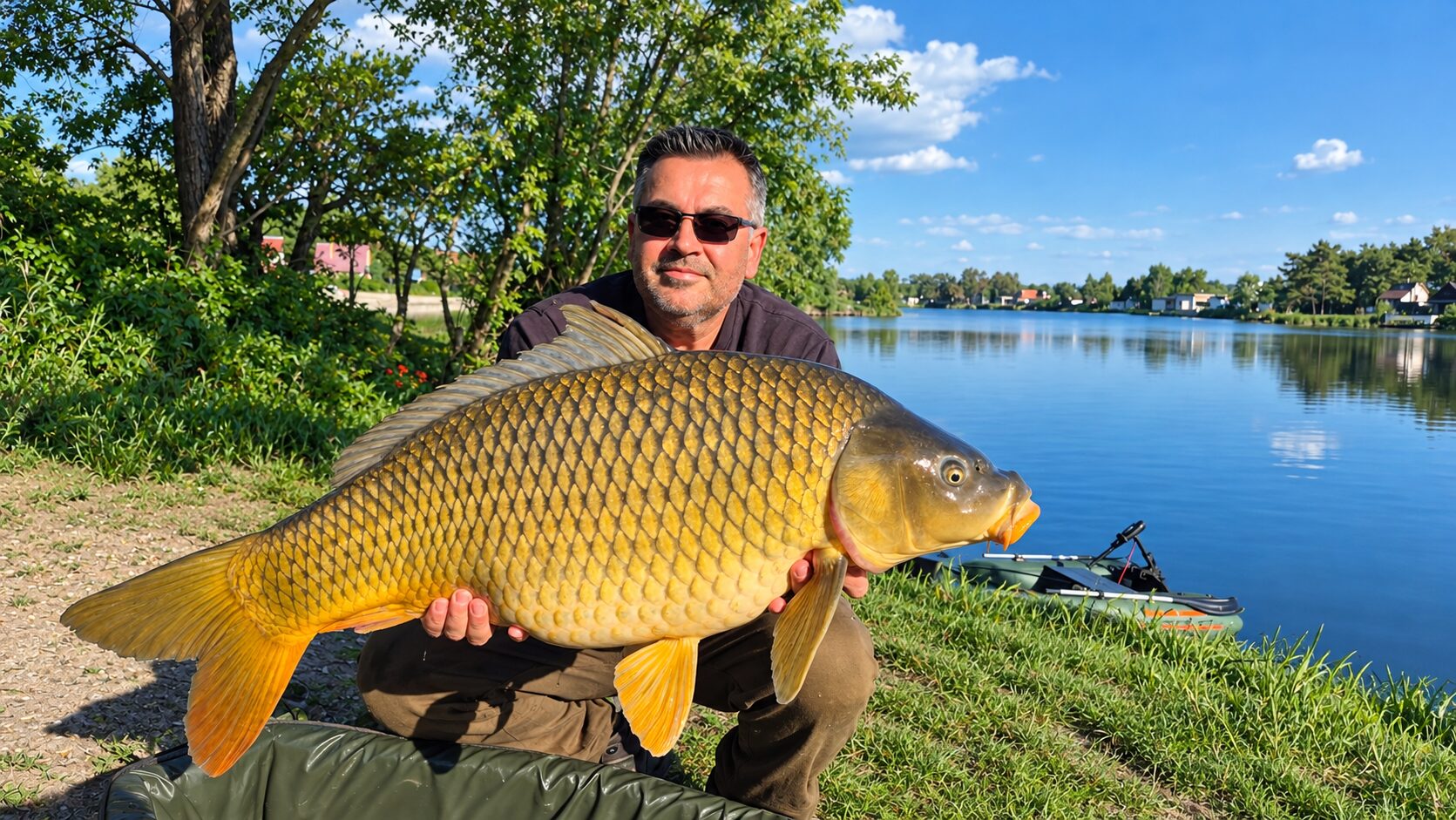
How this catch ranks
- In the 2026 season#1by length, 2 catches in total
- Among the same species#1the first catch in this selection
- At Štrkovisko Kňaz – Malé Leváre#1the first catch in this selection
Badges for this catch
- Giant
- Trophy fish
- Big fish
- Above-average fish
- Pioneer
- Beginner
- Wild carp (sazan)
- Carp and crucian carp
- Carp water
- Still water
- Decent fish
- Released
- Spring catch
- First photo
About the species Wild carp (sazan)
Basic information from the fish catalogue. Sizes and temperatures come from the FishBase database; the figures for this catch are a comparison with them.
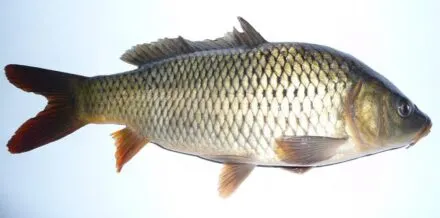
Fish, carp family
- Maximum lengthup to 120 cmthis catch is 81% of the maximum
- Maximum weightup to 37 kg
- Best water temperature18–28 °C
How to recognise it
The wild ancestor of the farmed carp: a slimmer, cylindrical body completely covered in scales (no leather or mirror forms), olive-green to golden-brown, with two pairs of barbels.
Where it lives
Large lowland rivers and their backwaters. It is very rare in our waters.
What it feeds on
Invertebrates from the bottom and plant food.
Spawning
In May and June in overgrown shallows.
Only the wild sazan is protected. The pond carp (the farmed form) is not protected and may be caught under the rules, so learn to tell them apart.
Conditions at the moment of the catch
Conditions at the time of the catch, read from portal data when the catch was logged.
Portal activity index at the time of the catchRecalculated from measured data. The index is an indicative estimate by the portal, not a measurement, and guarantees nothing.
- Air18.6 °C
- Pressure1 019 hPasteady (+0.2 hPa in 3 h)
- Wind4 km/hfrom W, gusts 17 km/h
- Cloud cover0%
- Water10.5 °Cestimated from the air temperature
What the index is made of
The base of 69 points is set by the water temperature; the other factors shift it.
- +1Pressuresteady (0.2 hPa/3 h)Steady pressure is usually favourable according to anglers; studies have not confirmed it.
- +1Windweak, 4 km/hA light wind ripples the surface and brings food to the bank (anglers' experience).
- −3Cloud coverclear, 0%Strong midday sun scares fish; they stay deep and in the shade.
- −3Water clarity≈ 18 FNU, satellite 10 NovTurbid water: visibility drops and fish rely more on smell and vibrations, so try more conspicuous baits.
- −2ChlorophyllHigh chlorophyll, possible bloom, NDCI 0.11, satellite 10 NovPlenty of algae in the water; there may be less oxygen near the bottom.
- −2OvergrowthMarkedly overgrown, 35% of the area, satellite 10 NovVegetation narrows the open spots for fishing; look for clear windows and platforms.
- −2Water level from the satellite73% of the usual area, satellite 10 NovMarkedly lowered water level: fish retreat to depth and the banks are exposed.
- −2Invasive species nearbyPrussian carp, pumpkinseed, GBIFInvasive species displace native fish and occupy shallows. The score reduction is only small.
- −1Nitrogen in groundwater (SHMÚ)nitrates typically 0.5 mg/l (standard 50), ammonium above the standard at 1 of 5 stationsGroundwater reaches streams as base flow and carries nitrogen from fields and waste. Nitrates feed algae and contribute to nighttime oxygen crashes; nitrites are toxic to fish. Nitrites and ammonium can also be natural in deep groundwater, so at most one point is deducted for them. The data reliability is 85% (5 stations within 10 km, nearest 3.4 km, data from 2025), and the adjustment was applied in full.
- −2Harmful substances in groundwater (SHMÚ)metals and metalloids (above the standard at 2 of 5 stations), highest value 12 times the standardMetals, pesticides, PFAS and chlorinated solvents above the standard show the burden on the surroundings. The standards are set for drinking water and are stricter than the limits harmful to fish, so the reduction is small; metals can also come from rocks. PAHs are not counted in the score. Data reliability is 85% (5 stations within 10 km, the nearest 3.4 km, data from 2025); the adjustment was applied in full.
- −1Iron in groundwater (SHMÚ)iron typically 2.79 mg/l (standard 0.2)Dissolved iron precipitates when groundwater emerges into the air and clogs gills, gravel with eggs and invertebrate shelters. Data reliability is 85% (5 stations within 10 km, the nearest 3.4 km, data from 2025); the adjustment was applied in full.
- 0Aquatic insect hatches0.0× the average month, 0 of 25 observations in the year, iNaturalistAquatic insects are scarce this month; food near the bottom matters more.
- +1Water hardness≈ 13.8 °dH, ŠGÚDŠ atlasHarder water is more productive, has more food and buffers acidity swings better.
The day of the catch in numbers
Hours before and after the bite, based on hourly weather data.
50 to 65 out of 100
1,014 to 1,019 hPa
7.3 to 21.7 °C
1 to 12 km/h
- bite
- start of fishing
- night
Sun, Moon and solunar
Calculated for the fishing district's location and the time of the bite.
- Sunrise05:06
- Sunset20:30
- Day length15 h 24 min
- MonthWaxing crescent8% illuminated, day 3 of the lunar cycle
- Moonrise06:47
Solunar windows that day
- 22:50 – 23:50Minor windowMoonset
- 02:03 – 04:03Major windowMoon underfoot
- 06:17 – 07:17Minor windowMoonrise
- 14:36 – 16:36Major windowMoon at its highest
- 23:47 – 00:47Minor windowMoonset
Solunar theory is not scientifically proven, so the windows are only a minor addition to the activity index.