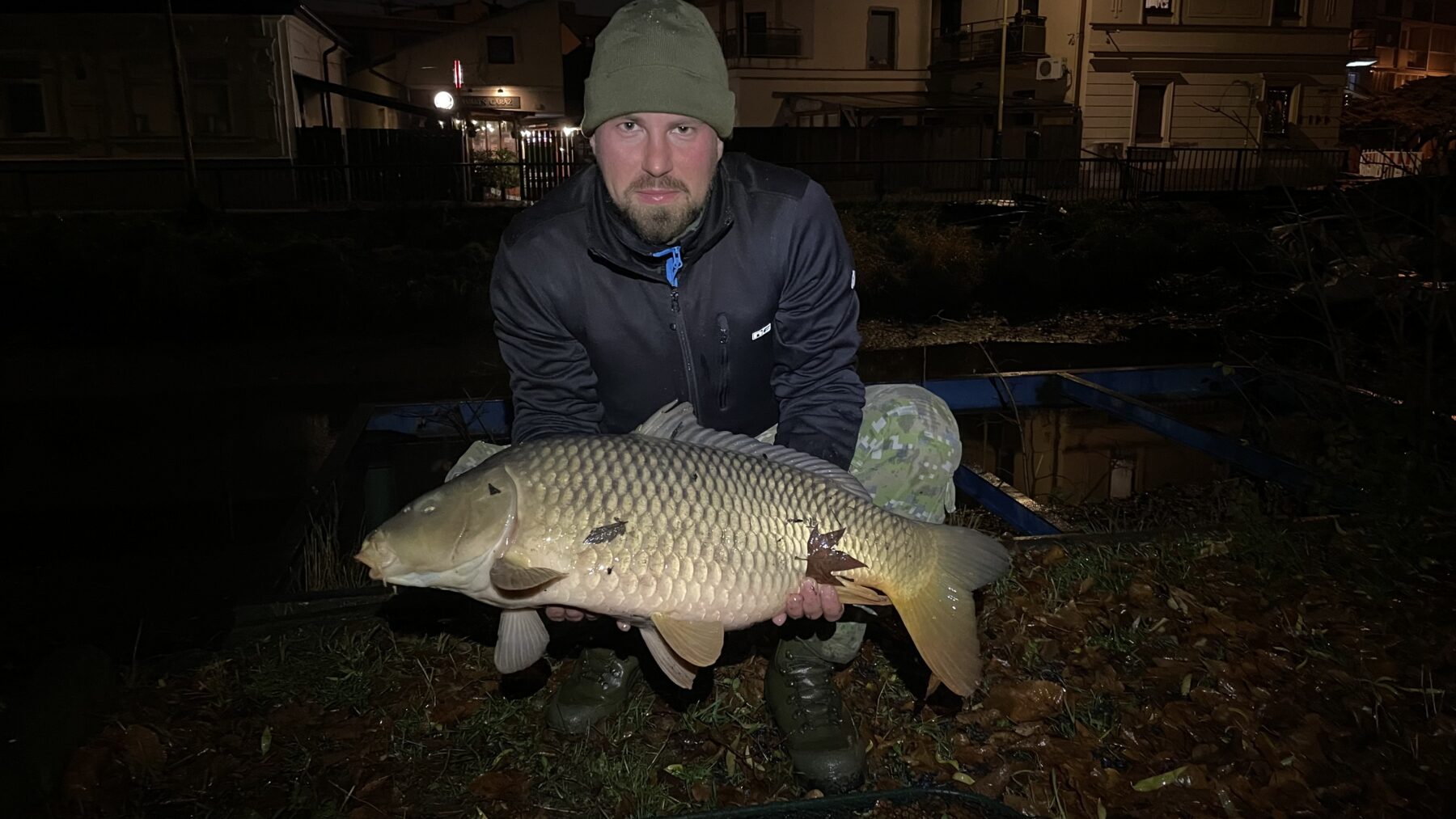
How this catch ranks
- In the 2026 season#2by length, 7 catches in total
- Among the same species#1by length, 2 catches in total
- At Hornád č. 1b#1the first catch in this selection
Badges for this catch
- Giant
- Above-average fish
- Common carp
- Carp and crucian carp
- Scout
- Carp angler
- Double
How the session went
From the start of fishing to the photo, with sunrise and sunset that day.
- Start of fishing19:20
- 1 h 20 minWaiting for the biteBite20:40
- 5 minPlaying the fishLanding20:45
- 2 minFrom landing to the photoPhoto20:47
- Whole session1 h 27 min
- Time of day at the biteNight
About the species Common carp
Basic information from the fish catalogue. Sizes and temperatures come from the FishBase database; the figures for this catch are a comparison with them.
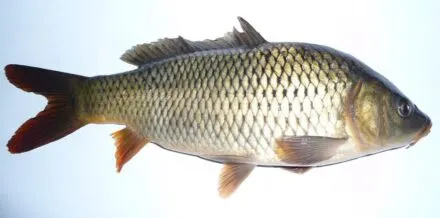
Fish, carp family
- Maximum lengthup to 120 cmthis catch is 68% of the maximum
- Maximum weightup to 37 kg
- Best water temperature18–28 °C
How to recognise it
Massive tall body, two pairs of barbels on the upper jaw and a long dorsal fin. It may be fully scaled, have only a few large scales (mirror) or be almost naked (leather).
Where it lives
Slow and still waters with a soft bottom: reservoirs, ponds, oxbows and lowland rivers.
What it feeds on
Omnivore. Insect larvae, worms, molluscs, plants and grains.
Spawning
In May and June in shallow, overgrown water, once the water warms up.
It is not very active in winter; from spring to autumn it is mainly caught near the bottom.
Conditions at the moment of the catch
Conditions at the time of the bite, read from portal data when the catch was logged.
Portal activity index at the time of the biteRecalculated from measured data. The index is an indicative estimate by the portal, not a measurement, and guarantees nothing.
- Air6.4 °C
- Pressure994 hPafalling fast (-4.9 hPa in 3 h)
- Wind16 km/hfrom S
- Cloud cover100%
- Rain0.3 mm/h
- Water5.0 °Cestimated from the air temperature
What the index is made of
The base of 18 points is set by the water temperature; the other factors shift it.
- −3Pressurefalling fast (-4.9 hPa/3 h)Anglers notice weaker bites after a sharp drop in pressure; studies have not confirmed it.
- −2Pressure level994 hPaVery low pressure (a low-pressure system).
- +1Windweak, 16 km/hA light wind ripples the surface and brings food to the bank (anglers' experience).
- +2Precipitationrain, 0.3 mm/hLight rain cools the surface and brings in oxygen (anglers' experience).
- −6Water clarity≈ 60 FNU, satellite 10 NovVery turbid water: visibility is short and sight fishing is difficult.
- 0ChlorophyllElevated chlorophyll, NDCI 0.08, satellite 10 NovRich food for small fish; in summer oxygen may run low near the bottom.
- 0OvergrowthClear surface, 1% of the area, satellite 10 NovOpen water surface, fishing is not limited by vegetation.
- +1Watercourse sizecatchment above the spot 2,393 km², average flow 20.4 m³/s, HydroRIVERSA large river has a more stable temperature and water level.
- 0Surface water quality (SHMÚ)site Ždaňa on Hornád, on the fishing district line, standard not met in 1 of 4 years (2022 to 2025); in 2023: nitritesThe nearest SHMÚ monitoring site on this watercourse fails the standards only for indicators that are not counted in the score: most streams exceed the extremely low PAH standard (benzo(a)pyrene and similar), and salts, iron or manganese are often natural. You can find the indicators in the breakdown for the fishing district.
- −1Harmful substances in groundwater (SHMÚ)solvents and benzene (above the standard at 1 of 5 stations), highest value 1 times the standardMetals, pesticides, PFAS and chlorinated solvents above the standard show the burden on the surroundings. The standards are set for drinking water and are stricter than the limits harmful to fish, so the reduction is small; metals can also come from rocks. PAHs are not counted in the score. Data reliability is 100% (8 stations within 10 km, the nearest 0.1 km, data from 2025); the adjustment was applied in full.
- −1Wastewater treatment plants near the fishing districtWWTP Cana, 0.4 km: fails requirements (phosphorus)A treatment plant that does not meet the requirements of Directive 91/271/EEC or is overloaded may discharge more nutrients and organic matter into the watercourse. The treatment plant need not lie upstream of the fishing district (we do not assess the watercourse), so the weight is small.
- 0Aquatic insect hatches0.0× the average month, 0 of 16 observations in the year, iNaturalistAquatic insects are scarce this month; food near the bottom matters more.
- +1Water hardness≈ 13.4 °dH, ŠGÚDŠ atlasHarder water is more productive, has more food and buffers acidity swings better.
How conditions changed during the session
| Data | Start of fishing | Bite | Landing | Photo |
|---|---|---|---|---|
| Time | 19:20 | 20:40 | 20:45 | 20:47 |
| Air | 6.1 °C | 6.4 °C | 6.4 °C | 6.4 °C |
| Pressure | 996 hPa | 994 hPa | 994 hPa | 994 hPa |
| Wind | 14 km/h S | 16 km/h S | 16 km/h S | 16 km/h S |
| Cloud cover | 100% | 100% | 100% | 100% |
| Water (estimated from air temperature) | 5.0 °C | 5.0 °C | 5.0 °C | 5.0 °C |
| Activity index | 8 | 10 | 10 | 10 |
The day of the catch in numbers
Hours before and after the bite, based on hourly weather data.
8 to 25 out of 100
994 to 1,009 hPa
3.8 to 6.8 °C
9 to 16 km/h
- bite
- start of fishing
- night
Sun, Moon and solunar
Calculated for the fishing district's location and the time of the bite.
- Sunrise06:46
- Sunset15:53
- Day length9 h 07 min
- MoonFirst quarter56% illuminated, day 8 of the lunar cycle
- Moonrise12:40
- Moonset23:04
Solunar windows that day
- 04:25 – 06:25Major windowMoon underfoot
- 12:10 – 13:10Minor windowMoonrise
- 16:46 – 18:46Major windowMoon at its highest
- 22:34 – 23:34Minor windowMoonset
Solunar theory is not scientifically proven, so the windows are only a minor addition to the activity index.