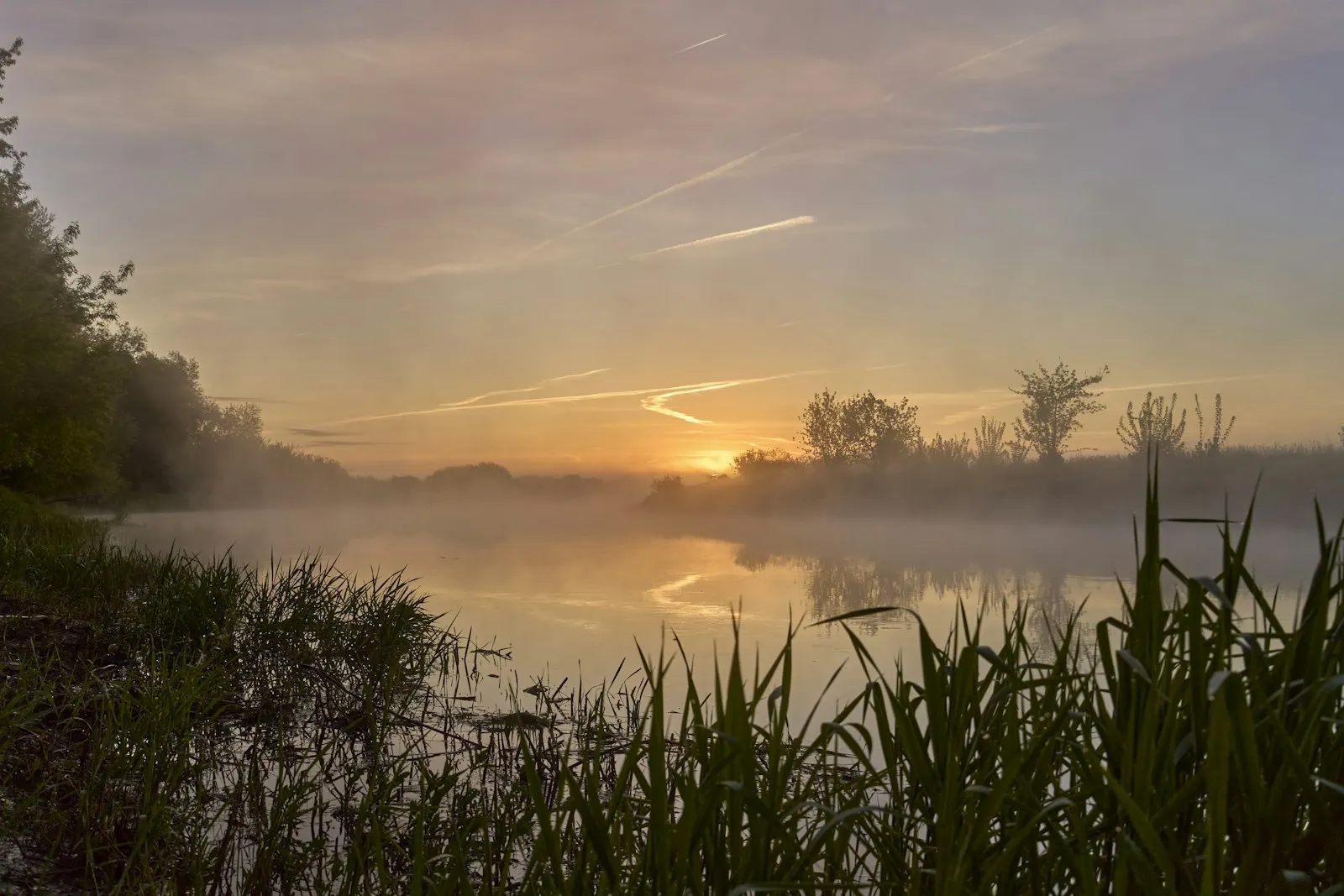
At the top of every fishery page there is a number from 0 to 100 headed Fishing conditions. It is an estimate of how favourable today's weather and water are for the fish and for the angler. It is not a bite forecast: fish also respond to things that cannot be measured from public data, such as angling pressure on the fishery, the amount of food or what happened in the water yesterday. The score is best used for comparison: today against tomorrow, or one fishery against another.
What the score is made of
The score takes into account water temperature, cloud cover and daylight, sunrise and sunset, the change and level of air pressure, wind and gusts, precipitation, water level and turbidity after rain. For reservoirs, data from the Sentinel-2 satellites are added: water clarity, chlorophyll, surface vegetation and ice. Data on water quality from SHMÚ monitoring and on the surroundings, such as shading of the banks or the depth of the reservoir, carry less weight.
For each factor, the methodology states how well it is supported:
- A – proven: a physical law or several studies on fish. Water temperature, the basis of the whole score, belongs here.
- B – partly supported: at least one study, the effect is usually small. For example cloud cover and light, or water turbidity.
- P – anglers' practice: experience that studies have not confirmed or that nobody has measured. It carries little weight.
- H – hypothesis: preliminary or contradictory findings. Their total is capped so that they cannot dominate the score.
- S – safety: strong gusts or ice on the surface lower the score even if the fish would be biting.
Below the score you can expand how many points each factor added or removed, each with a short explanation and a source.
Water temperature is the basis
Fish are cold-blooded, so the water temperature determines how fast their metabolism runs and how much food they take. Salmonids such as trout and grayling prefer cold water, and in a hot summer they approach the limit of what they can tolerate. Carp, on the other hand, feed most in warm water. The score therefore does not compare the temperature with a single “ideal”, but separately for each species that lives in the fishery and may be fished today.
On rivers with an SHMÚ gauging station the temperature is measured. Elsewhere it is estimated from the weather of the last few days and the type of water: shallow reservoirs and small streams warm up and cool down faster than a large river. In the fish catalogue you can see for each species at which temperature it is most active.
Pressure, the Moon and other angling certainties
Many anglers swear by falling pressure before a front or by solunar tables. Studies on freshwater fish, however, have not confirmed this or give contradictory results. These factors are therefore in the score, but with little weight: pressure change at most ±3 points, the Moon at most ±2 points. If your own experience tells you otherwise, nothing stops you from trusting it.
The same goes for wind: in studies it did not significantly affect catches, but strong wind makes casting and spotting bites harder. That is why we treat it as a practical obstacle. Gusts and thunderstorms are a different category: they are a matter of safety.
Water level and turbidity
On rivers and streams, check the water level as well. Rising water changes the current and becomes murky; falling water gradually clears. After heavy rain the water is murky and fish that hunt by sight are less likely to notice the bait. We estimate turbidity from the rainfall total over the last 24 hours; for reservoirs it is complemented by satellite images.
Law today
Before heading to the water, also check the Law today widget. It shows on which types of water fishing is currently allowed, at what times and which species are in their closed season. The score only counts species that may be fished on that day. Details are in the Fishing law guide. What always counts is the fishing rules of the specific fishery, which may be stricter.
How to read it all together
- A high score and a suitable water temperature for the species you want to catch is a good sign.
- A low score because of safety (gusts, thunderstorms, ice) should be taken seriously. In a thunderstorm a carbon rod is a lightning conductor.
- A low score because of hypotheses, such as the phase of the Moon, can safely be ignored.
- A difference of a few points between two days means nothing. Only larger differences matter.
And whether your day goes well or not, record your catch. The conditions at the time of the bite are saved with it, and over time many catches show what really works on a particular fishery.
Cover photo: Wolfgang Hasselmann, Unsplash (Unsplash License)
More articles
 Portal newsWelcome to the Rybárstvo.sk blogThe blog is a place for stories from the water, experiences from fisheries and portal news. Any signed-in angler can write for it. · 3 min read · Redakcia Rybárstvo.sk
 Fisheries and watersReservoir bottoms and entire rivers in 3D: what you will see in the modelHow the bottom model is made, why it can be trusted more for some reservoirs and what the Fish, Geology and flow modes show. · 3 min read · Redakcia Rybárstvo.sk
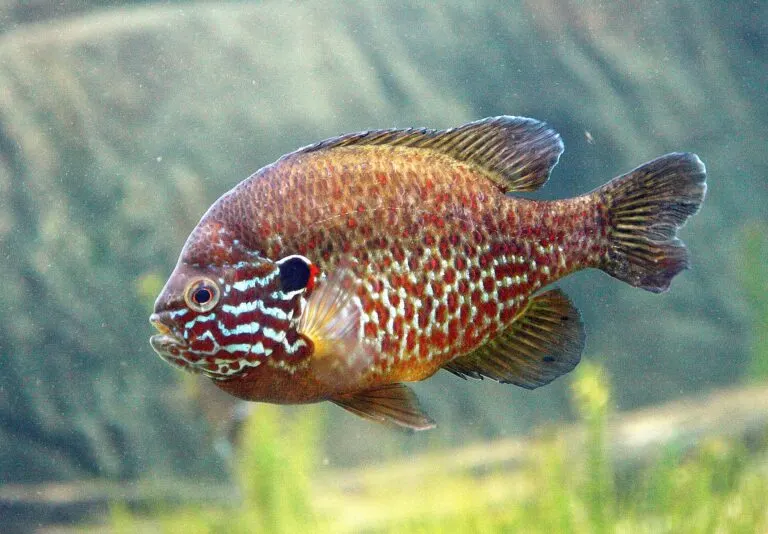 Fish and natureInvasive fish species in Slovakia: how to recognise them and what the decree saysGobies, bullheads, pumpkinseed and topmouth gudgeon: which fish the decree lists as invasive, how to recognise them and what applies when an angler catches one. · 3 min read · Redakcia Rybárstvo.sk
Have your own story from the water or a proven method? Write it up and we will publish it under your name.
Leave a comment